Boat interiors rarely deteriorate all at once. Instead, small signs gradually appear across cushions, seams, and seating surfaces. A little fading may eventually become cracking, while slightly compressed foam can turn into serious discomfort during longer trips. Recognizing these changes early can help owners plan maintenance before minor problems become extensive restoration projects. An upholstery boat seat deserves particular attention because it receives constant use while also facing sunlight, water, humidity, and salt. If you are considering professional marine upholstery work, you can explore services here from Boat Upholstery Broward, a company specializing in upholstery for boats and yachts.
Fading Is More Than a Cosmetic Problem
Discoloration is one of the easiest signs to notice.
Constant sunlight can gradually change the appearance of marine upholstery. However, significant fading may also indicate that the material has experienced prolonged UV exposure.
Once a surface becomes faded and brittle, it may become more vulnerable to cracking.
Owners should pay particular attention to seating located in open cockpits and other areas exposed directly to sunlight.
Cracks Can Spread Quickly
Small cracks often appear harmless.
However, movement, heat, and repeated use can cause damaged areas to expand. Once the protective surface breaks, moisture can reach deeper layers of the seating.
Regular inspections can help owners identify early cracking before it spreads across an entire cushion.
An upholstery boat seat with widespread surface damage may eventually require more than a simple repair.
Flattened Foam Reduces Comfort
A cushion can look perfectly acceptable while its internal foam has already deteriorated.
Repeated pressure gradually compresses foam. Over time, cushions may feel harder, uneven, or less supportive than they once did.
This becomes especially noticeable during long fishing trips or extended cruises.
Replacing worn foam during an upholstery boat seat restoration can restore the original shape and provide more consistent support.
Loose Stitching Needs Immediate Attention
Stitching keeps upholstery components together.
When threads begin to loosen, the surrounding material can experience additional stress. A small opening may then become a larger separation.
Checking seams during routine cleaning makes it easier to identify these problems early.
Prompt attention can often prevent damage from spreading to neighboring sections.
Moisture Can Hide Beneath the Surface
Water damage is not always visible immediately.
Moisture can enter through damaged seams, small tears, or openings around cushion edges. Once it reaches the foam, it may contribute to odors and mildew.
After rain or heavy spray, cushions should dry thoroughly before owners cover the vessel.
An upholstery boat seat that repeatedly remains damp deserves careful inspection.
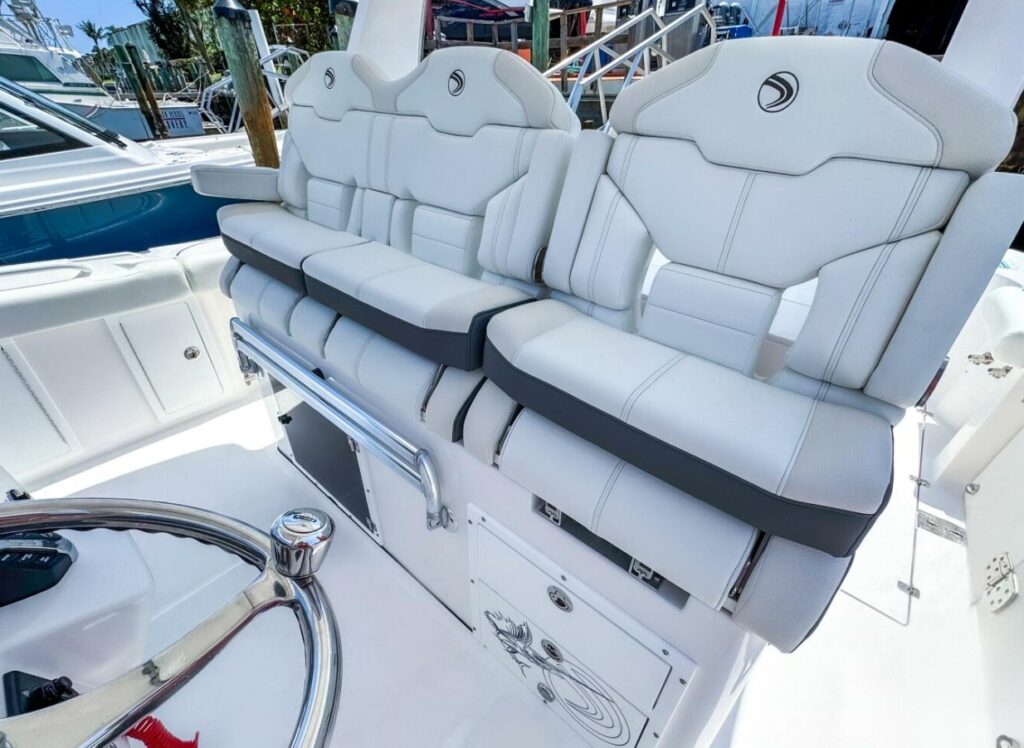
Material Choice Affects Longevity
Replacing damaged upholstery with unsuitable material can create the same problem again.
Marine seating requires materials capable of handling UV exposure, moisture, salt, and repeated cleaning. Marine-grade vinyl remains a popular choice because it combines durability with a wide range of colors and textures.
When choosing replacement materials, consider:
- UV resistance
- Water resistance
- Mold resistance
- Color retention
- Cleaning requirements
- Surface durability
The right material should match both the vessel and its typical environment.
High-Use Seating Ages Faster
Some areas naturally deteriorate sooner than others.
Helm seats, cockpit benches, and frequently used passenger cushions receive more pressure and exposure than protected interior seating.
Owners should therefore inspect these areas more often.
An upholstery boat seat located in a high-traffic area may require stronger materials and more frequent maintenance to remain comfortable.
Changes in Appearance Can Reveal Bigger Problems
A seat that suddenly looks uneven may indicate an internal issue.
Changes in cushion shape can result from compressed foam, damaged support structures, or moisture inside the cushion. Owners should not always assume that a new exterior covering will solve the problem.
A complete inspection can identify the underlying cause before restoration begins.
Regular Maintenance Delays Major Restoration
Good maintenance can slow the aging process.
After each trip, owners should remove salt and other contaminants from seating. Wet cushions should dry completely, while spills should receive immediate attention.
Useful habits include:
- Wiping seating after every outing
- Removing salt residue
- Drying cushions completely
- Cleaning spills quickly
- Checking seams regularly
- Using marine-safe cleaning products
These simple actions can help extend the life of an upholstery boat seat.
Know When Replacement Makes More Sense
Repairs remain useful when damage affects a small area.
However, widespread cracking, repeated seam failures, severe fading, and damaged foam may indicate that replacement offers a better long-term solution.
Restoring the complete seating system can create a consistent appearance and address several problems at the same time.
For older boats, this can also provide an opportunity to improve cushioning and introduce more durable materials.
Final Thoughts
Boat seating provides important clues about the condition of a marine interior. Fading, cracking, loose stitching, flattened cushions, and moisture should not be ignored because these problems can become more difficult to address over time.
An upholstery boat seat that receives regular inspections and proper care can remain comfortable and attractive for longer. When restoration becomes necessary, combining durable marine materials with fresh cushioning and professional workmanship can give the interior a renewed lease on life.